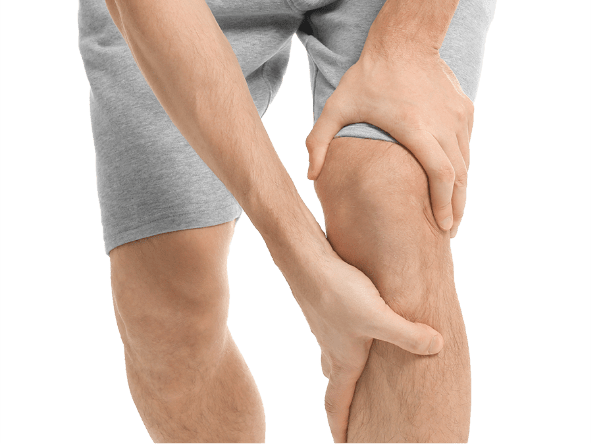
Is it time to take control of your knee pain?
Why does my knee hurt?
You rely on your knees to walk, bend, and turn, so your knees get a workout every day, whether you exercise or not. If your knee hurts, it may be telling you something’s wrong.
Learn moreWhat can I do?
Talk to your doctor. They’ll typically manage your knee pain caused by arthritis by first recommending non-surgical treatments, such as medication or physical therapy. But sometimes that’s just not enough, and your doctor may recommend other treatment options, including replacing parts of your damaged knee.
Learn moreWhat have other patients experienced?
Your body is different from everyone else’s. Your pain is different, too. But, a lot of folks have something in common: knee pain slowed them down and kept them from activities they love.
See their storiesWhere can I learn more?
Managing your knee pain can be confusing, but we can provide you with information to help you on your journey. We’ve collected resources and put together some FAQs to help you take control of your knee pain.
Learn moreKnee Replacements
Total knee replacement is intended for use in individuals with joint disease resulting from degenerative, rheumatoid and post-traumatic arthritis, and for moderate deformity of the knee.
Knee replacement surgery is not appropriate for patients with certain types of infections, any mental or neuromuscular disorder which would create an unacceptable risk of prosthesis instability, prosthesis fixation failure or complications in postoperative care, compromised bone stock, skeletal immaturity, severe instability of the knee, or excessive body weight.
As with any surgery, knee replacement surgery has serious risks which include, but are not limited to, pain, infection, bone fracture, peripheral neuropathies (nerve damage), circulatory compromise (including deep vein thrombosis (blood clots in the legs)), genitourinary disorders (including kidney failure), gastrointestinal disorders (including paralytic ileus (loss of intestinal digestive movement)), vascular disorders (including thrombus (blood clots), blood loss, or changes in blood pressure or heart rhythm), bronchopulmonary disorders (including emboli, stroke or pneumonia), heart attack, and death.
Implant related risks which may lead to a revision include dislocation, loosening, fracture, nerve damage, heterotopic bone formation (abnormal bone growth in tissue), wear of the implant, metal and/or foreign body sensitivity, soft tissue imbalance, osteolysis (localized progressive bone loss), and reaction to particle debris. Knee implants may not provide the same feel or performance characteristics experienced with a normal healthy joint.
The information presented is for educational purposes only. Speak to your doctor to decide if joint replacement surgery is right for you. Individual results vary and not all patients will return to the same postoperative activity level. The lifetime of any joint replacement is limited and varies with each individual. Your doctor will counsel you about how to best maintain your activities in order to potentially prolong the lifetime of the device. Such strategies include not engaging in high-impact activities, such as running, as well as maintaining a healthy weight. It is important to closely follow your doctor’s instructions regarding post-surgery activity, treatment and follow-up care. Ask your doctor if the joint replacement is right for you.
Stryker Corporation or its other divisions or other corporate affiliated entities own, use or have applied for the following trademarks or service marks: Mako, Mobile Bearing Hip, Stryker, Together with our customers, we are driven to make healthcare better. All other trademarks are trademarks of their respective owners or holders.
JR-GSNPS-WEB-573900